Problems we solve
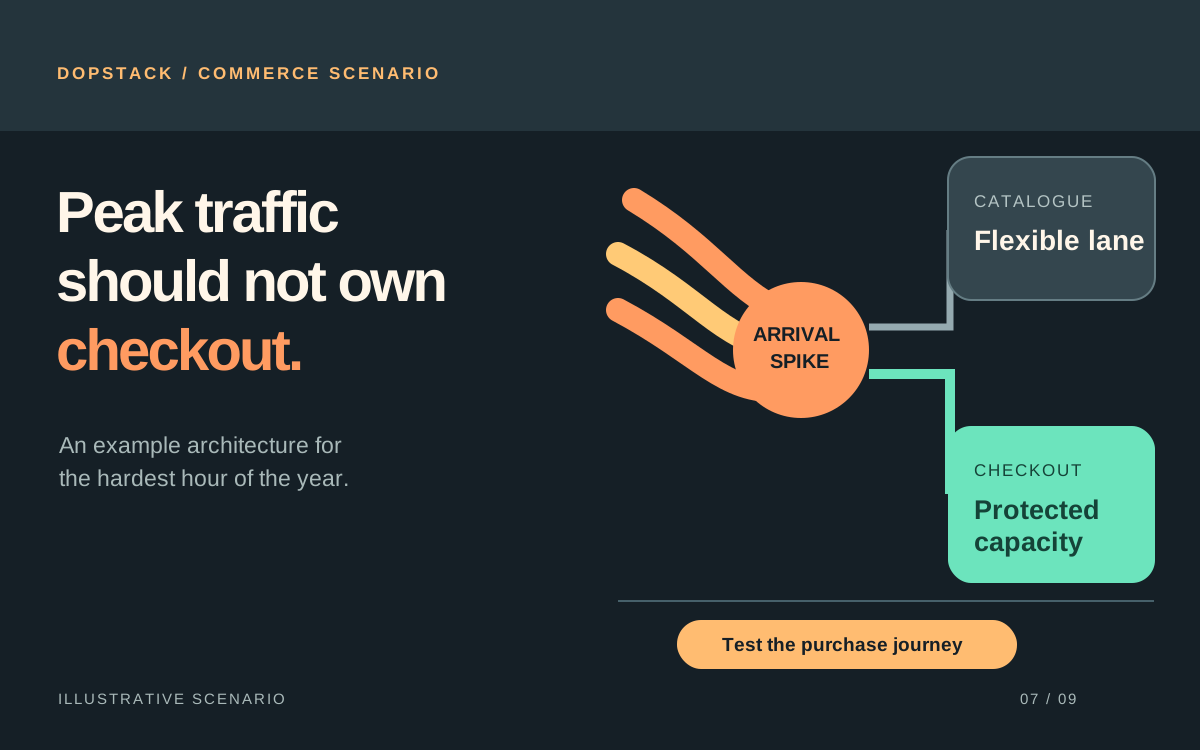
- Traffic peaks cause outages the infrastructure cannot absorb
- Releases are manual and risky enough that nobody wants to do them
- Cloud spend keeps climbing with no clear link to capacity
- Nobody knows the system is failing until a customer reports it
Where this fits
- Migrating off on-prem or a legacy hosting provider
- A system that falls over under real traffic
- No CI/CD, where every release is still a manual event
- Needing an on-call-ready team without building one in-house
What's included
- Cloud architecture & migration
- Kubernetes & containerization
- CI/CD pipelines
- Observability & incident response
Technologies
Process
How we deliver it.
01
Assess
We audit the current infrastructure, cost profile and failure points before recommending a single tool, so the plan fits the system you actually have.
- Infrastructure audit
- Cost & risk assessment
- Migration plan
02
Architect
Infrastructure gets defined as code from day one — every environment reproducible, every change reviewed like application code.
- Infrastructure as code
- Environment strategy
- Security & access model
03
Automate
CI/CD pipelines that make deploying boring: tested, reversible, and fast enough that shipping small is the easy option.
- CI/CD pipelines
- Automated rollback paths
- Container orchestration
04
Operate
Observability and incident response that catch problems before your customers do, with a runbook your own team can pick up.
- Monitoring & alerting
- On-call runbooks
- Ongoing optimization
Outcomes
What you have at the end.
Concrete artefacts and capabilities, not a status report.
Why Dopstack
What working with us looks like.
From the blog
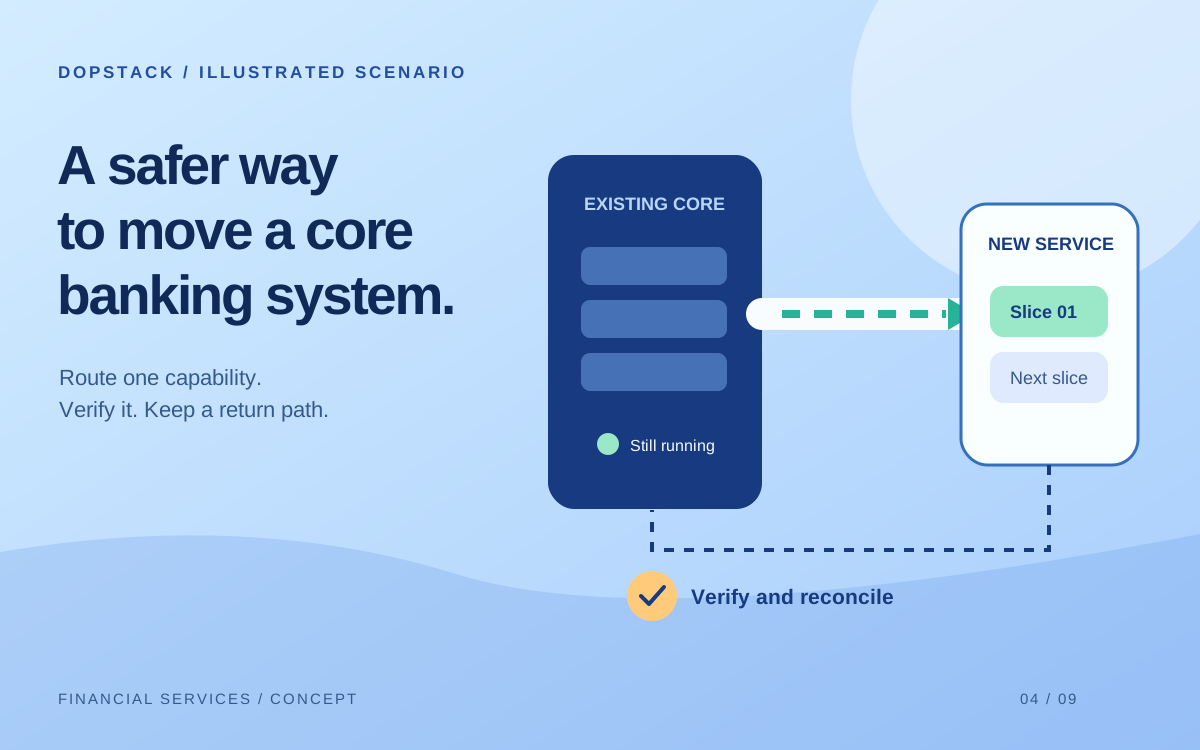
Explore a representative scenario.
Illustrative engineering scenarios, not published client projects.
FAQ
Questions we get asked.
Do we have to move to Kubernetes?
No. Kubernetes solves a specific set of problems and adds real operational cost. If your workload does not need it, we will say so and use something simpler.
Can you migrate us without downtime?
Usually. Most migrations can run staged, with the old and new paths live in parallel and traffic shifted gradually. Where a cutover window is genuinely unavoidable we will say so early and rehearse it.
Will our team be able to operate this after you leave?
That is the goal. Infrastructure is code, pipelines are documented, and we write the runbooks with your engineers rather than for them.
Can you reduce our cloud bill?
Often — though we would want to see the architecture and actual usage before putting a number on it. Most of the saving usually comes from right-sizing, autoscaling and storage lifecycle rather than one dramatic change.