Illustrative engineering scenario
This is a conceptual example of how we would approach a representative problem. It is not a published client project or a claim of delivered results.
The short version
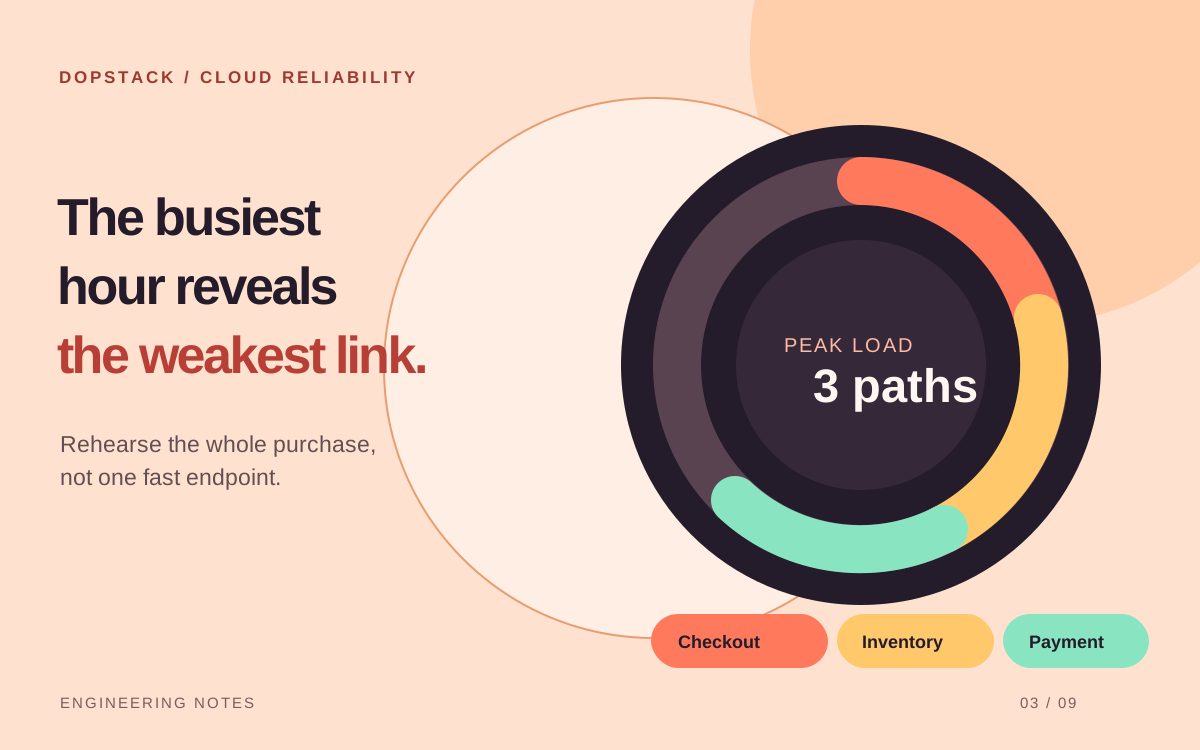
A fast homepage is not a resilient checkout; test the complete order and its ambiguous failure states.
The decision in this scenario
Imagine a retailer preparing for a short, high-intensity sale. The team can add application instances, but inventory, database connections and payment capacity may still constrain completed orders. This scenario is a design exercise, not a claim that a particular retailer experienced an outage or loss.
A defensible starting approach
We would map the purchase journey end to end, then rehearse a realistic mix of browsing and ordering in an authorized test environment. Protecting checkout may require isolating worker pools, database connections or quotas, not just deploying a separate service. Google's overload guidance supports degrading less-critical work when capacity runs short.
Evidence: Google SRE: Handling Overload
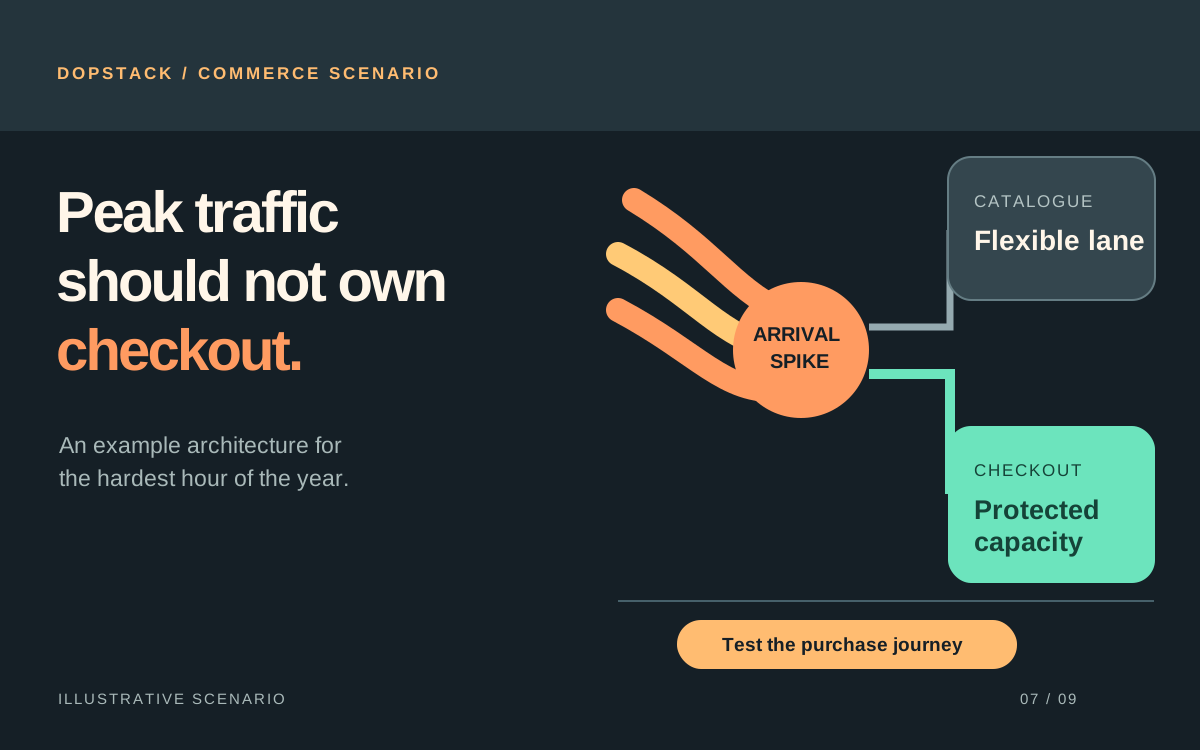
Illustrative architecture
Protect checkout's actual bottleneck.
Peak arrivals
A sudden burst of buyers.
Catalogue lane
Cache and degrade when needed.
Checkout lane
Reserve and monitor scarce capacity.
Protect the scarce resource, not the diagram
If recommendations and checkout share a database pool, scaling only the checkout containers can make contention worse. Prioritize the work that completes an order and define which optional responses may degrade first. Never degrade price, payment status or stock information into something misleading merely to keep a page fast.
Autoscaling can help with elastic compute, but it reacts within limits and incurs cost. Pre-event capacity, rate limits and supplier quotas still need explicit decisions. The correct headroom comes from a rehearsal of this store's traffic, not a generic percentage.
Evidence: Google SRE: Handling Overload
Rehearse the payment timeout that is not a failure
The hardest case is a payment that succeeded while the response was lost. A blind retry can create another operation unless the payment request and order workflow use stable identities. Stripe documents idempotency keys for its API, but that feature does not reconcile your inventory or order database automatically.
Record confirmed, pending and failed orders separately, then test what customers and staff see after a spike. The tradeoff may be to stop accepting new orders temporarily rather than accept work whose status cannot be determined. Put that decision in the event runbook before the sale starts.
Evidence: Stripe: Idempotent requests
What the team would need to build and prove
- Purchase-journey tracing from cart to confirmation
- Isolation or prioritization of shared capacity bottlenecks
- Safe retry identity and payment/order reconciliation
- Mixed-traffic load tests with dependency delays
- Event runbooks covering overload, spend and recovery
What success would mean
Success would be a measured purchase-completion target and a team that knows how to detect, degrade and recover from the first limiting dependency. The scenario does not assert that any target has been reached.
Technologies in this example
- AWS
- Kubernetes
- Redis
- Next.js
Sources & further reading
- Google SRE: Handling Overload
Primary guidance on degraded responses and overload; retail priorities are hypothetical.
- Stripe: Idempotent requests
Documents Stripe API retry semantics, not end-to-end order consistency.
Written by Dopstack Technologies
We design and build software, cloud infrastructure and AI workflows. These notes explain engineering decisions; illustrative scenarios are not claims of client results.
Meet the team