Challenges
- Real-time visibility across the supply chain
- Integration with legacy operational systems
- High-availability requirements
Our approach
- Event-driven architecture for real-time data
- Resilient, observable infrastructure
- API-first integration strategy
Capabilities
What we build for transportation & delivery.
What we design for
The constraints that shape architecture decisions in this sector.
- Isolation between upstream integrations so one carrier failure degrades one lane
- Event-driven data flow in place of scheduled polling
- Availability that matches the physical operation it supports
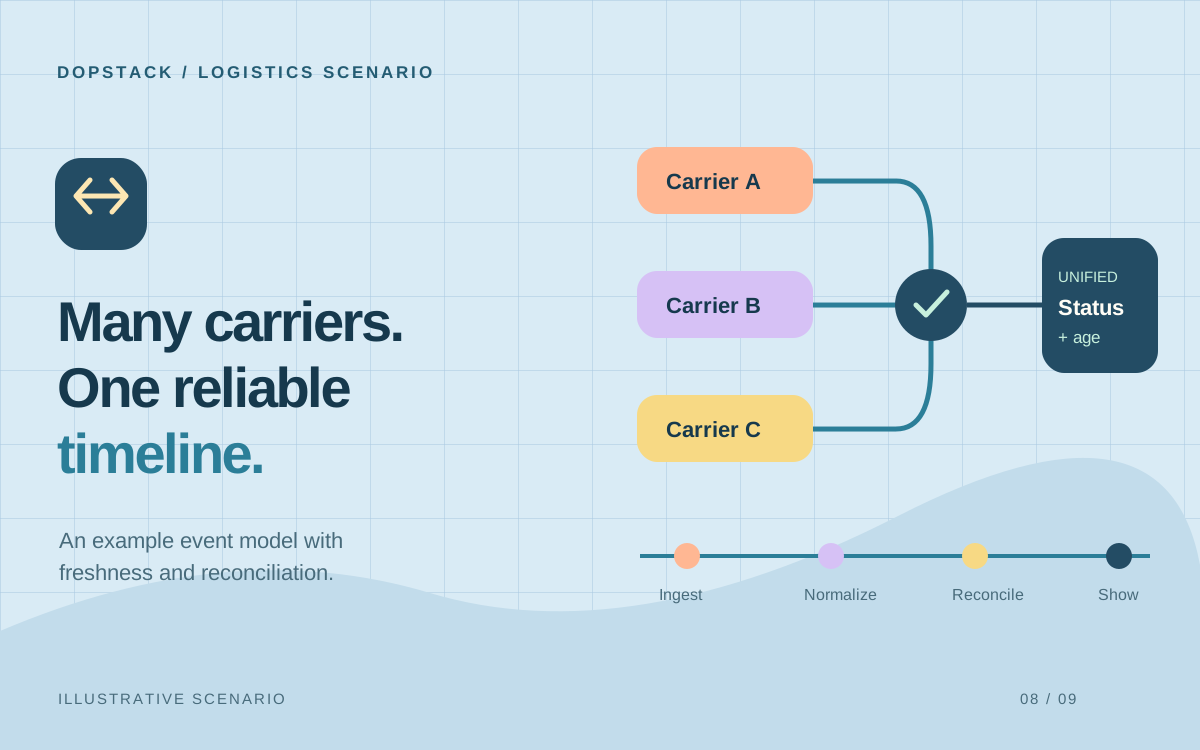
- A normalized model that survives adding the next carrier
Typical engagements
The work teams in this sector most often bring to us.
- Normalizing tracking data across multiple carrier APIs
- Real-time exception and delay alerting for operations
- Route, fleet or warehouse optimization tooling
- Operational dashboards over live shipment data
Why Dopstack
Why teams in this sector work with us.
From the blog
Related engineering scenarios.
Representative problems and approaches, not published client projects.
Services
How we usually engage here.
FAQ
Questions we get asked.
How do you handle unreliable carrier APIs?
By assuming they will fail. Per-carrier adapters are isolated so a bad upstream degrades that lane rather than the whole tracking picture, with retries and backfill once it recovers.
Do you replace our TMS or WMS?
Rarely. Most of the value comes from integrating and unifying what already runs, not swapping it out.
Is real-time always necessary?
Not always — polling is cheaper and simpler. The right answer depends on how quickly a delay needs to reach someone who can act on it, and we would size it against that.