The short version
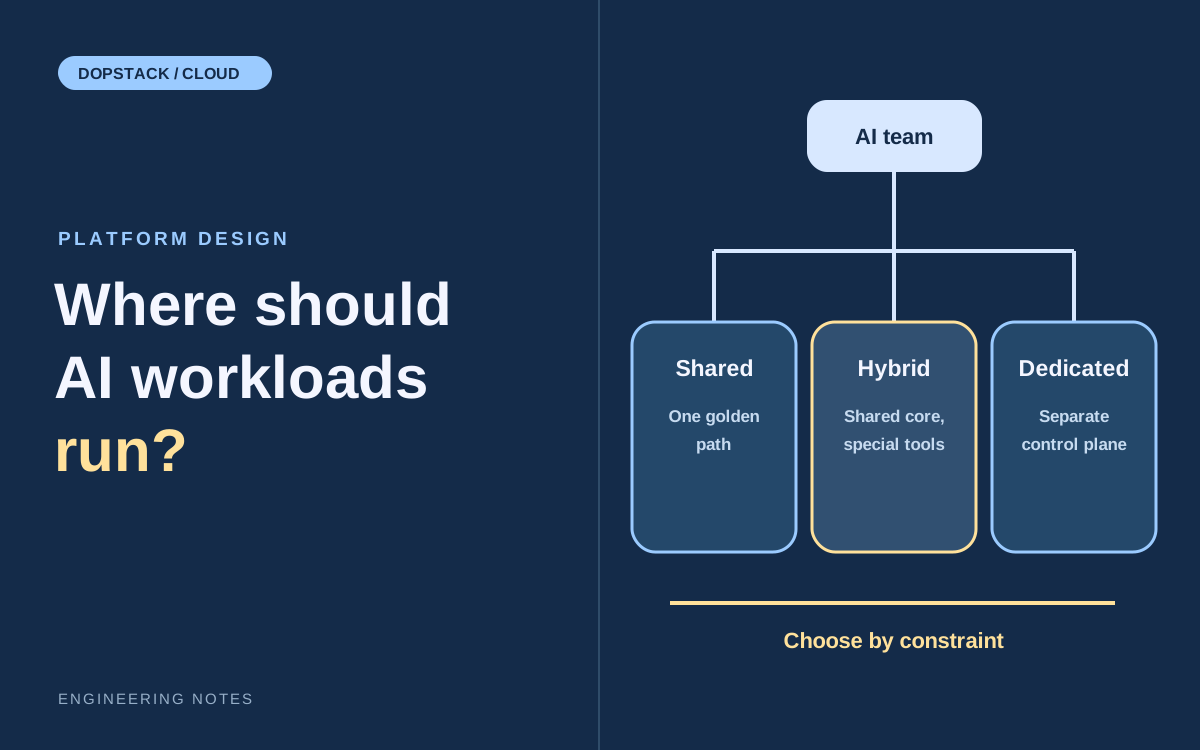
Keep common delivery controls shared where they work: identity, source control, deployment, observability and cost ownership. Add specialized AI services only where workload needs justify them, and split the platform when isolation or operational constraints cannot be met safely in the shared path.
Classify the workload before choosing a platform
A team calling a hosted model API has different needs from a team serving its own model on GPUs. Another team may run batch evaluations, while a fourth needs low-latency inference with customer data. Put each workload on one page: compute shape, data sensitivity, deployment frequency, latency target, failure impact, regional constraints and who operates it at 02:00. That inventory reveals which parts of the existing platform are reusable.
The CNCF and SlashData 2026 survey reports hybrid approaches among respondents managing AI workflows. That is evidence of a common design direction, not proof that a hybrid platform is right for every company. The decision still starts with the constraints of your workload and the maturity of your existing developer platform.
Evidence: CNCF and SlashData: Q1 2026 platform engineering survey
Compare shared, hybrid and dedicated paths
A shared path uses the same deployment pipeline, runtime and controls as other applications. It is often enough for API-backed features, especially when model access is an external dependency. The risk is that AI-specific quotas, evaluations and data handling end up as undocumented exceptions inside a platform built for ordinary services.
A hybrid path keeps identity, CI/CD, policy, observability and service ownership common, while adding specialized model gateways, vector storage, evaluation jobs or GPU pools as platform products. A dedicated path can make sense when strict isolation, unusual hardware scheduling or independent change control dominates. It also creates a second operating model; budget for that duplication rather than treating it as free separation.
Evidence: CNCF and SlashData: Q1 2026 platform engineering survey
Keep one visible control plane for risk and cost
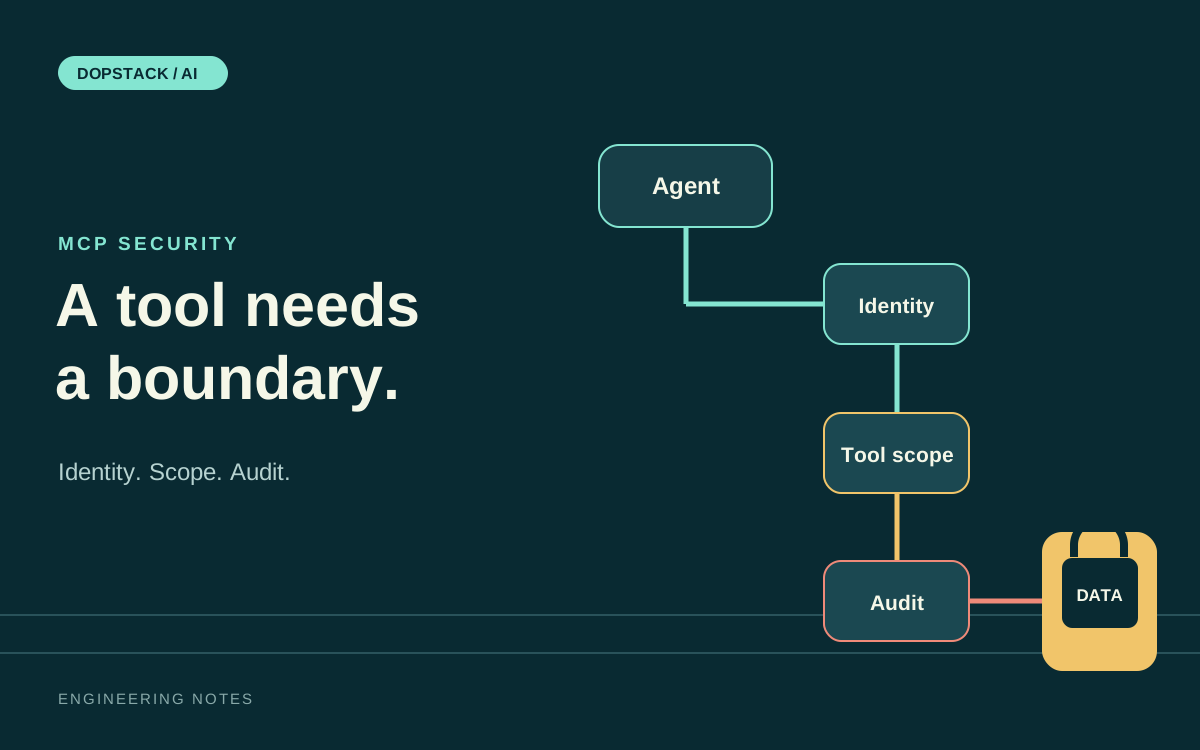
Whatever path you choose, an application owner should be able to answer who may call a model, which data may leave the boundary, how a version is released and rolled back, and which team pays for the workload. Put those answers in standard templates and policies. Treat evaluation results and model/provider changes as release inputs, because a deployment can be technically healthy while the answers it produces have regressed.
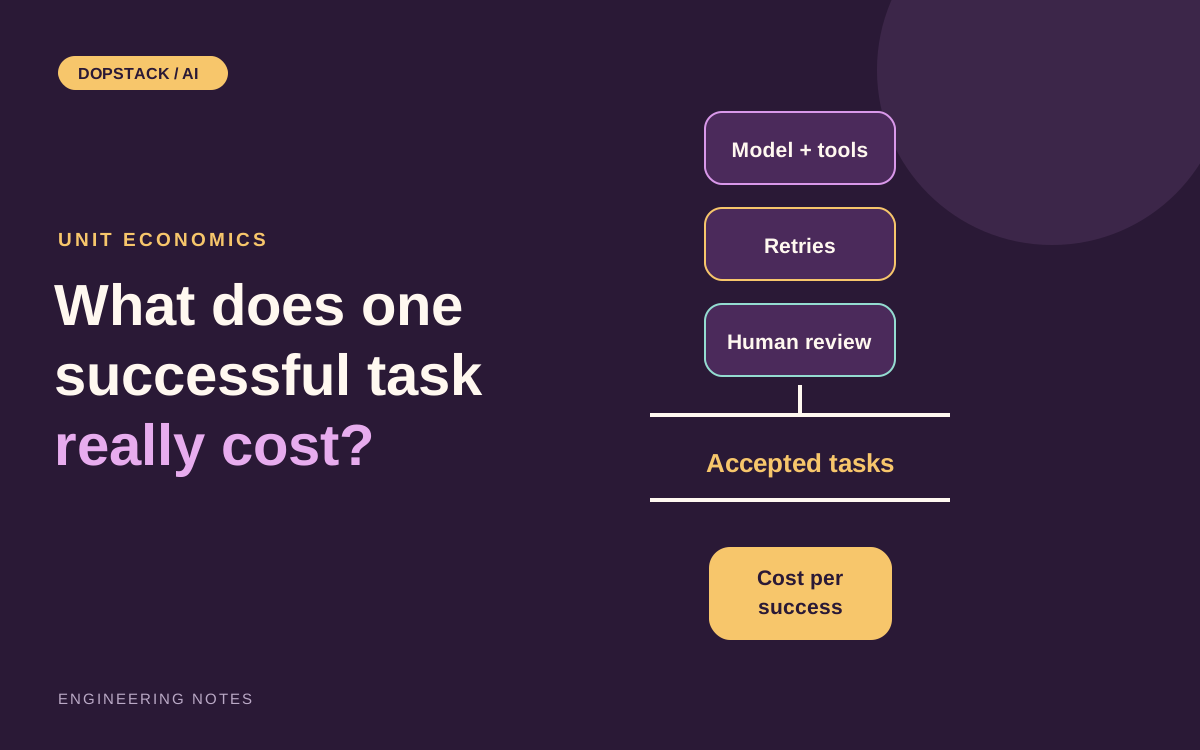
A shared platform should not give every project access to the same secrets or data. Make tenant and environment boundaries explicit. For GPU or other constrained capacity, expose quotas and queue behavior to teams rather than hiding contention behind a successful deployment status. Cost attribution should follow the workload and task, including shared gateways and background evaluation.
- Use one owner and rollback path per workload.
- Expose data and model access boundaries.
- Track evaluation and latency alongside infrastructure health.
- Allocate shared gateway and compute costs to users.
Evidence: CNCF and SlashData: Q1 2026 platform engineering survey · FinOps Foundation: State of FinOps 2026
Pilot the smallest path and set exit criteria
Take one representative workload through the current delivery path first. Measure where the path bends: manual approvals, opaque costs, unsafe secrets handling, missing evaluation gates or impossible capacity reservations. Add a specialized platform service only for the constraint you observed. If several teams need it, give the service an owner, support commitment and documented interface.
Review the decision when data classification, model hosting or hardware needs change. A move to a dedicated environment should have a clear reason and migration cost, while a return to shared controls should remain possible where isolation allows it. Platform design is an operating decision, not a label attached to a cluster.
Sources & further reading
- CNCF and SlashData: Q1 2026 platform engineering survey
Survey of more than 400 professional developers; reported platform patterns are directional, not a mandate for this architecture.
- FinOps Foundation: State of FinOps 2026
Practitioner survey identifies AI spend management as a priority. It does not measure the cost of this proposed platform.
Written by Dopstack Technologies
We design and build software, cloud infrastructure and AI workflows. These notes explain engineering decisions; illustrative scenarios are not claims of client results.
Meet the team