The short version
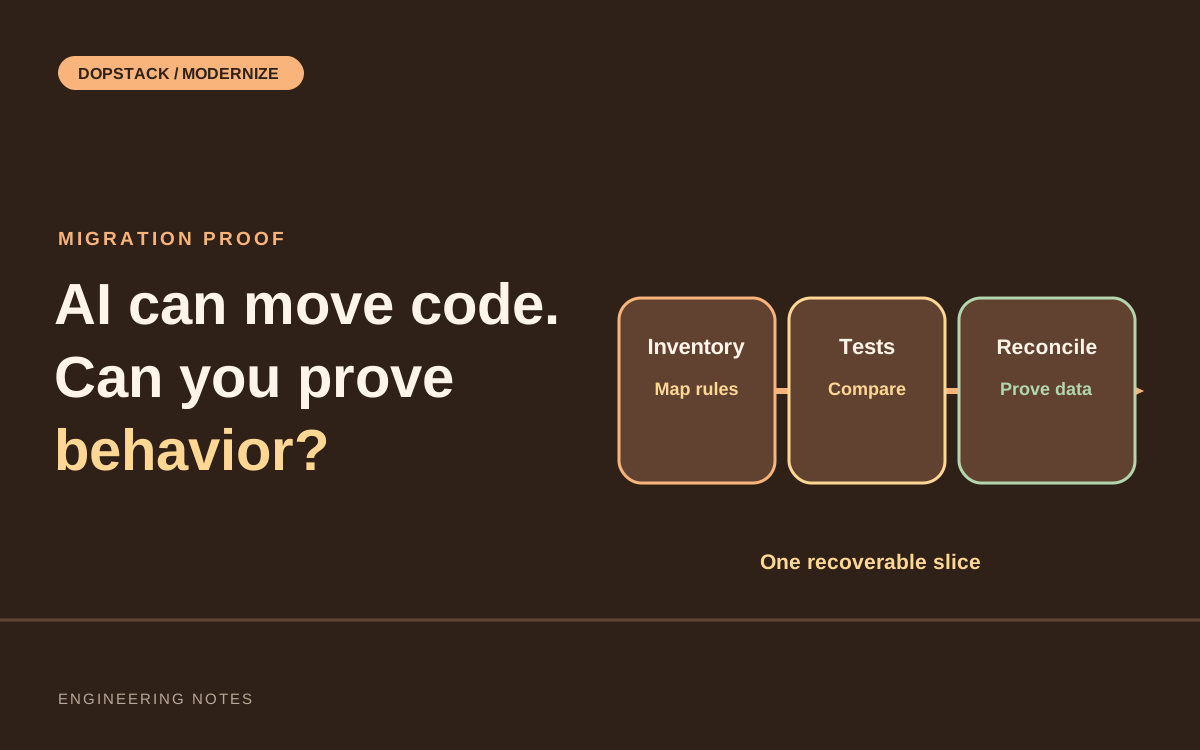
Use AI to accelerate investigation and repeatable transformations, then treat every generated change as an unproven hypothesis. Preserve behavior with representative tests, reconcile business data and move one recoverable capability at a time.
Find the rules before translating the code
A pricing rule may live in a nightly job, a database trigger and a support team's exception spreadsheet. Translating the main application faithfully could still change customer outcomes. Start with a capability map: entry points, data ownership, jobs, external consumers, manual overrides and reports. Ask domain experts which outputs have contractual or regulatory meaning and where exceptions are handled today.
AI can help summarize call graphs, cluster similar code paths and draft a list of suspected rules. Label those findings as leads until an engineer traces them through real execution and a business owner confirms the behavior. MITRE's discussion of AI for legacy modernization stresses that complex systems still need evidence of correctness; generated code is not the same as a verified migration.
Evidence: MITRE: Legacy IT modernization with AI
Choose repeatable work for AI assistance
Good early candidates are dependency inventory, test scaffolding, mechanical API upgrades and draft migration playbooks for patterns that recur across repositories. Give the tool examples of both a correct transformation and a case it must leave alone. Keep a record of the source version, prompt or playbook, generated diff and reviewer decision so the next run can be compared.
AWS describes generating structured playbooks from migration artifacts to make repeated code changes more consistent. That is a vendor account of its own approach, not proof that every estate will see the same result. Reserve high-stakes business rules, data semantics and cutover decisions for engineers and domain owners who can test the outcome, not just read the diff.
Evidence: AWS: Reproducible code migration with AI-generated playbooks
Build a behavioral baseline that can fail
Capture representative inputs and expected outputs before changing the path: ordinary transactions, boundary dates, rounding cases, cancellations, partial records and known exceptions. Compare the old and new behavior in a safe environment. When outputs differ, classify the difference as an intended policy change, a legacy defect to retain temporarily, or a migration regression. Do not make the test pass by silently updating the expected value.
Regression, performance and security tests all matter in modernization, as Microsoft's cloud guidance notes. Add reconciliation of counts and business totals when data moves. A successful unit test does not prove that an overnight batch or downstream report received the same meaning. Agree on acceptable differences and owners before running the comparison.
- Keep a source-of-truth rule inventory with an owner.
- Version golden cases and generated transformations.
- Reconcile data totals and downstream reports.
- Record and approve every intended behavior change.
Move one slice with a recovery path
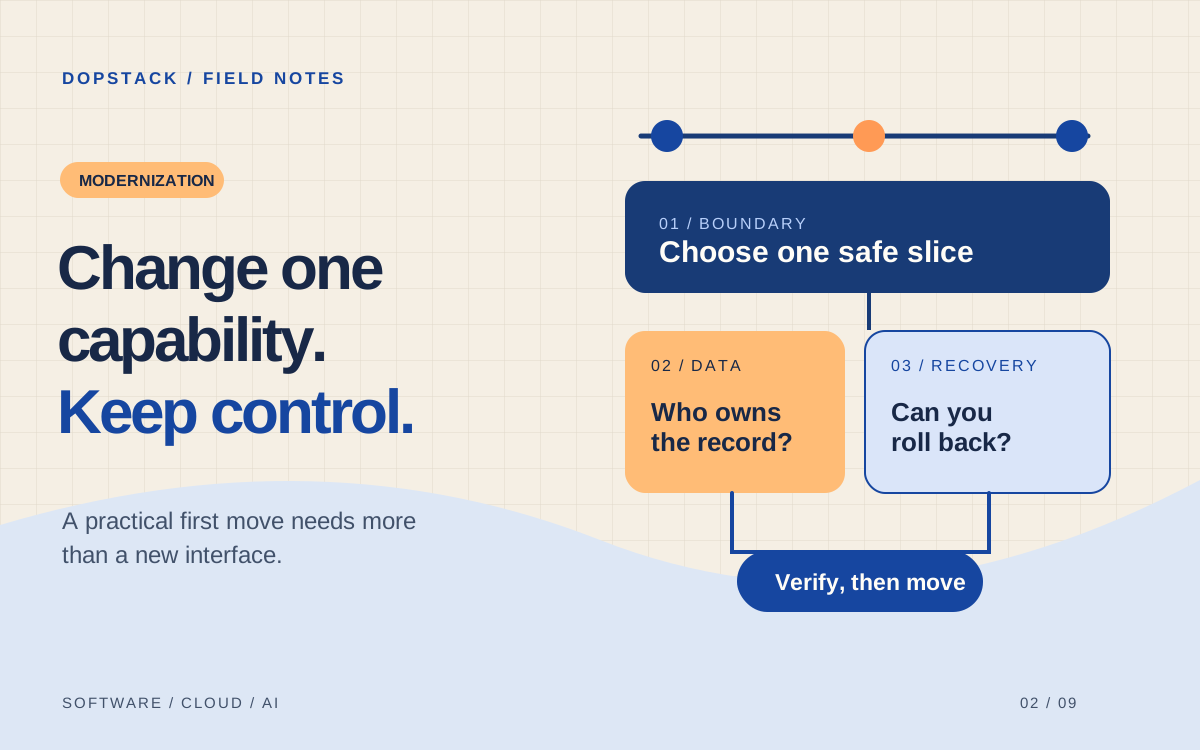
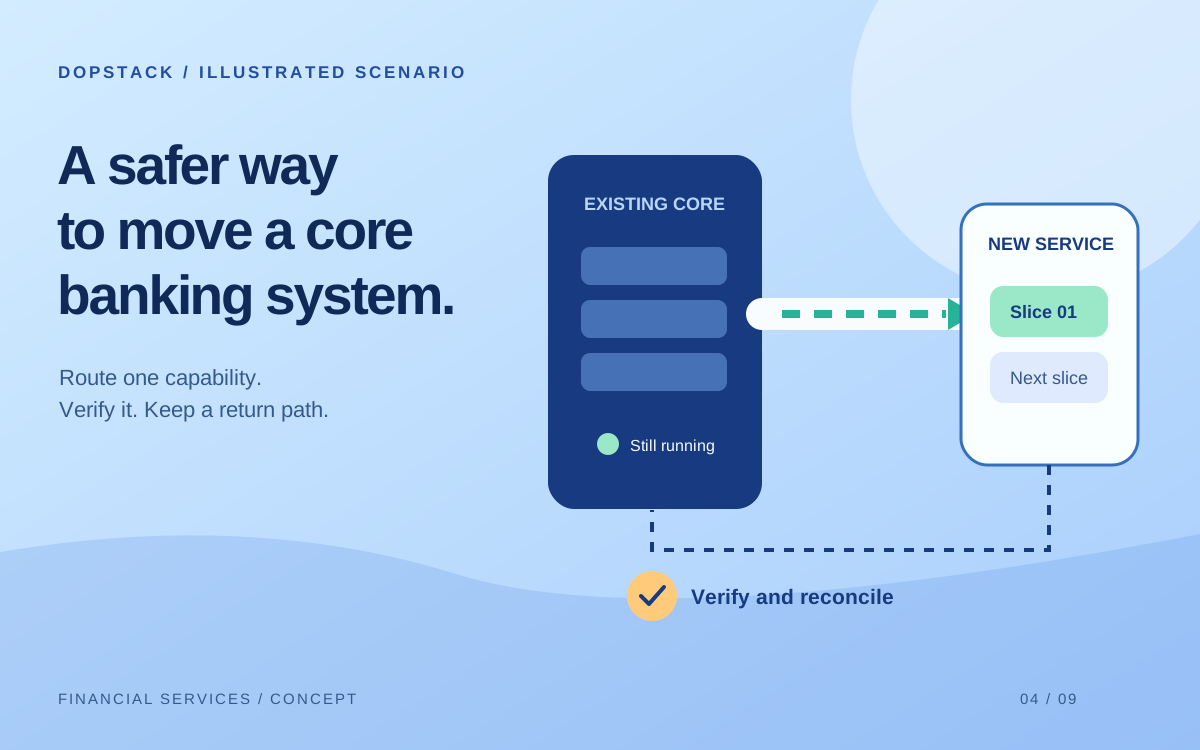
Choose a boundary whose requests and data can be observed end to end. Route a small share or run a shadow comparison where side effects permit it. Decide who writes each record during the transition and where corrections are made. An AI-assisted code change does not make a traffic rollback reverse a payment, notification or copied record; plan forward repair where needed.
Finish the slice only when operators can trace a disputed result, disable the new path and retire the old one on a named schedule. This is the same incremental discipline as a conventional migration, with an additional need to review generated assumptions. The useful question is which part of the work AI can make faster without weakening the proof that the business behavior survived.
Sources & further reading
- MITRE: Legacy IT modernization with AI
Discusses potential and uncertainty in complex legacy modernization; no performance claim is imported into this article.
- AWS: Reproducible code migration with AI-generated playbooks
Vendor case study on structured playbooks; applicability to other estates is not assumed.
- Microsoft: Execute modernizations in the cloud
Recommends incremental changes and regression, performance and security testing; the hypothetical pricing scenario is ours.
Written by Dopstack Technologies
We design and build software, cloud infrastructure and AI workflows. These notes explain engineering decisions; illustrative scenarios are not claims of client results.
Meet the team